
3D Design
3D Design
Define Requirements (Conceptualization): The process begins with clearly defining the project goals and initial design parameters. Clients specify the exact performance details:
Process needs: What fluid properties, flow rates, pressures, and temperatures are involved?
Physical constraints: Are there specific space limitations or environmental factors to consider?
Operational needs: Define utility requirements, safety protocols, and user interface preferences (e.g., HMI, electrical requirements).
Standards and codes: Specify any international standards (like API, ASME, etc.) the design must comply with.
2. Preliminary Design & Brainstorming: The defined requirements are used to develop initial concepts, often creating a Piping and Instrument Diagram (P&ID). This stage includes basic equipment selection (pumps, valves, instrumentation) and general layout ideas.
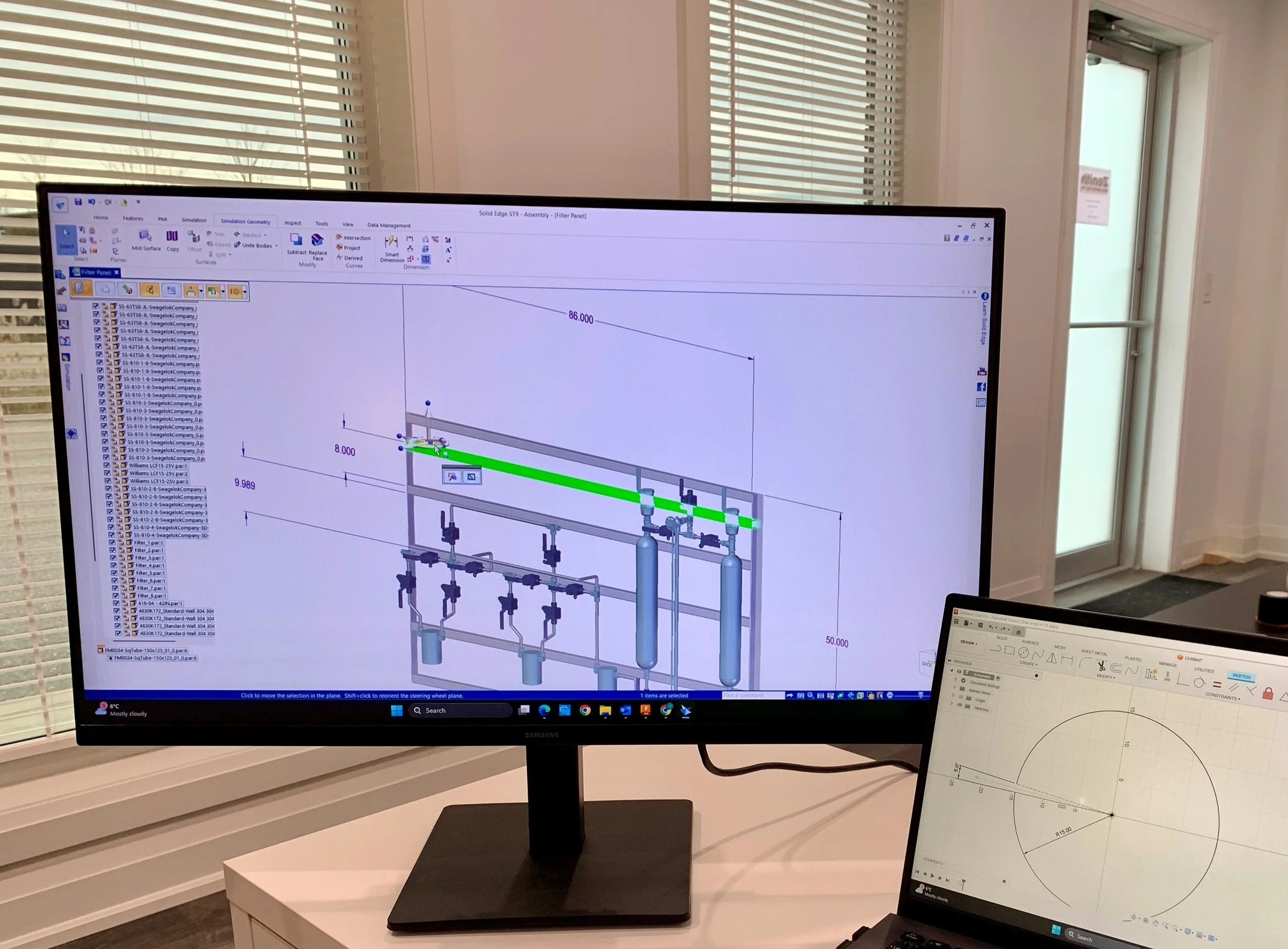
3. Detailed 3D Modeling & Design Development: The P&ID and other data is used to create a detailed 3D model using specialized CAD software. This virtual model allows for:
Spatial analysis: Ensuring all components fit efficiently within the skid's footprint and are accessible for maintenance.
4. Engineering analyses: Performing structural and piping stress analyses to optimize frame member size, ensure structural integrity, and address potential vibration issues.
Client review: Reviews and feedback of the 3D model and proposed layout to ensure it meets client expectations before manufacturing begins.
5. Documentation & Fabrication Drawings: Once the 3D model is finalized and approved, the necessary 2D drawings are extracted for manufacturing and fabrication, including general assembly drawings, piping isometrics, and bills of materials (BOM/MTO).
6. Fabrication & Assembly: The skid is then manufactured and assembled in a controlled setting based on the finalized drawings and specifications, which minimizes or eliminates on-site construction time.
7. Testing & Commissioning: The completed skid undergoes thorough testing, often simulating actual operating conditions, to verify it meets all performance specifications. Finally, it is transported to your site for installation and final commissioning into your operations.